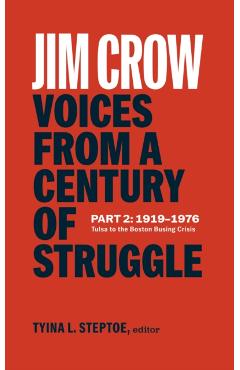
A vivid firsthand record of the struggle for legal equality and dignity in the face of segregation and racial terror from 1919 to 1976 nW.E.B. Du Bois famously identified the problem of the color-line as the defining issue in American life. The powerful writings gathered here reveal the many ways Americans, Black and white, fought against white supremacist efforts to police the color line, envisioning a better America in the face of disenfranchisement, segregation, and widespread lynching, mob violence, and police brutality. n nJim Crow: Voices from a Century of Struggle, Part Two brings together speeches, pamphlets, newspaper and magazine articles, public testimony and appeals, judicial opinions, and poems and song lyrics--more than ninety essential texts in all--from the end of the bloody Red Summer of 1919 to the Boston busing crisis of 1974-76. n nThis volume includes writing by both famous and lesser known individuals, including n n- B. C. Franklin on the Tulsa Massacre n- Robert Russa Motons suppressed address on the dedication of the Lincoln Memorial n- Alain Lockes tribute to the New Negro n- Ned Cobbs recounting of the harsh realities of sharecropping n- Thurgood Marshall on police brutality in wartime Detroit n- Rosa Parkss appeal for justice for Recy Taylor n- Earl Warrens landmark opinion in Brown n - Paul Robesons defiant response to congressional inquisitors n- Fannie Lou Hamers eloquent challenge to disenfranchisement in Mississippi n- and James Baldwin on the myths and meaning of the American Dream n nAlso presented are white supremacist writings from the 1920s Klan and the Dixiecrats of 1948; examples of Southern voter literacy tests; blues lyrics sung by Bessie Smith and Big Bill Broonzy; Robert F. Williamss controversial call for armed Black self-defense; speeches by Marcus Garvey and Stokeley Carmichael; letters in the Black press about Confederate monuments; Ann Moody on her childhood in segregated Mississippi; and Mary McLeod Bethunes advocacy for reproductive rights as an essential element of democratic freedom. n nAs the teaching of our nations history, especially the history of race in America, becomes increasingly contested, this book will serve as a vital resource, a crucial reminder of where weve been, how far weve come, and how long the road ahead remains.n