vândut de libris.ro
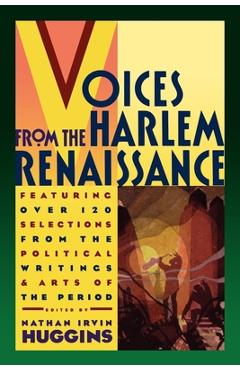
Nathan Irvin Huggins showcases more than 120 selections from the political writings and arts of the Harlem Renaissance. Featuring works by such greats as Langston Hughes, Aaron Douglas, and Gwendolyn Bennett, here is an extraordinary look at the remarkable outpouring of African-American literature and art during the 1920s. nThe Harlem Renaissance of the 1920s symbolized black liberation and sophistication--the final shaking off of slavery, in the mind, spirit, and character of African-Americans. It was a period when the African-American came of age, with the clearest expression of this transformation visible in the remarkable outpouring of literature, art, and music. In these years the New Negro was born, as seen in the shift of black leadership from Booker T. Washington to that of W.E.B. Du Bois, from Tuskegee to New York, and for some, even to the African nationalism of Marcus Garvey. In Voices from the Harlem Renaissance, Nathan Irvin Huggins provides more than 120 selections from the political writings and arts of the period, each depicting the meaning of blackness and the nature of African-American art and its relation to social statement. Through these pieces, Huggins establishes the context in which the art of Harlem Renaissance occurred. We read the call to action by pre-Renaissance black spokesmen, such as A. Philip Randolph and W.E.B. DuBois who--through magazines such as The Messenger (the only radical Negro magazine), and the NAACPs Crisis--called for a radical transformation of the American economic and social order so as to make a fair world for black men and women. We hear the more flamboyant rhetoric of Marcus Garvey, who rejected the idea of social equality for a completely separate African social order. And we meet Alain Locke, whose work served to redefine the New Negro in cultural terms, and stands as the cornerstone of the Harlem Renaissance. Huggins goes on to offer autobiographical writings, poetry, and stories of such men and women as Langston Hughes, Nancy Cunard, Helen Johnson, and Claude McKay--writings that depict the impact of Harlem and New York City on those who lived there, as well as the youthfulness and exuberance of the period. The complex question of identity, a very important part of the thought and expression of the Harlem Renaissance, is addressed in works such as Jean Toomers Bona and Paul and Zora Neale Hurstons Sweat. And Huggins goes on to attend to the voices of alienation, anger, and
Preț:
Vânzător: Libris.ro
Brand: Nathan Irvin Huggins