| Necropolis: Disease, Power, and Capitalism in the Cotton Kingdom - Kathryn Olivarius • libris.ro | 136.09 RON |
| Necropolis. Disease, Power, and Capitalism in the Cotton Kingdom, Paperback - Kathryn Olivarius • elefant.ro | 136.99 RON |
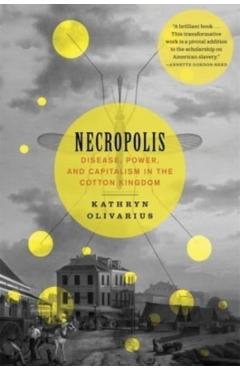
nWinner of the Frederick Jackson Turner Award nWinner of James H. Broussard Best First Book Prize, SHEAR nWinner of the Kemper and Leila Williams Prize in Louisiana History nWinner of the Humanities Book of the Year Award, Louisiana Endowment for the Humanities n nA brilliant book...This transformative work is a pivotal addition to the scholarship on American slavery. n--Annette Gordon-Reed n nA stunning account of high-risk, high-reward profiteering in the yellow fever-ridden Crescent City...a world in which a deadly virus altered every aspect of a brutal social system, exacerbating savage inequalities of enslavement, race, and class. n--John Fabian Witt, author of American Contagions n nOlivariuss new perspectives on yellow fever, immunocapitalism, and the politics of acclimation...will influence a generation of scholars to come on the intersections of racism, slavery, and public health. n--The Lancet n nIn antebellum New Orleans, at the heart of Americas slave and cotton kingdoms, epidemics of yellow fever killed as many as 150,000 people. With little understanding of the origins of the illness--and meager public health infrastructure--ones only hope if infected was to survive, providing the lucky few with a mysterious form of immunity. Repeated epidemics bolstered New Orleanss strict racial hierarchy by introducing another hierarchy, a form of immunocapital, as white survivors leveraged their immunity to pursue economic and political advancement while enslaved Blacks were relegated to the most grueling labor. n nThe question of health--who has it, who doesnt, and why--is always in part political. Necropolis shows how powerful nineteenth-century Orleanians constructed a society that capitalized on mortal risk and benefited from the chaos that ensued.n